
Creating
with AI
I’ve been curious about AI since I changed careers. These days, it’s part of my everyday design workflow. It’s constantly changing, occasionally surprising, and increasingly useful as I brainstorm, iterate, and build.
Rapid discovery & visual concepts
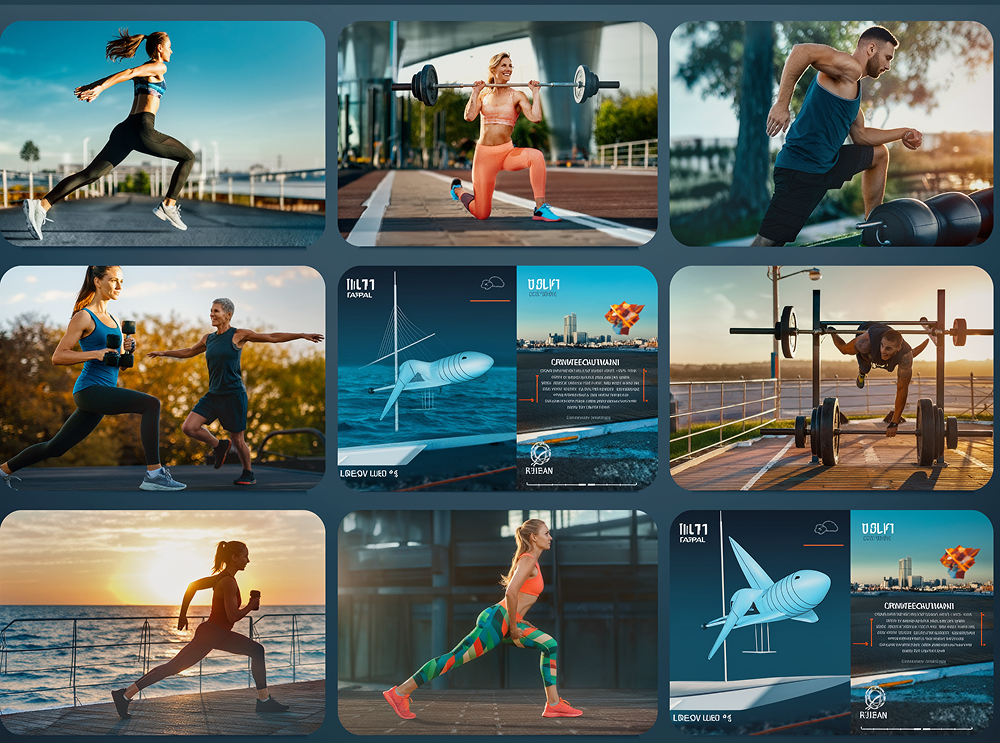
The course started with image generation. This was a fun way to quickly turn prompts into visuals, refine ideas, and identify patterns.
- Models: ChatGPT, Midjourney, Firefly, Gemini
My findings:
- Improved prompt engineering: Found subtle phrasing differences and using editorial language made a difference in outputs.
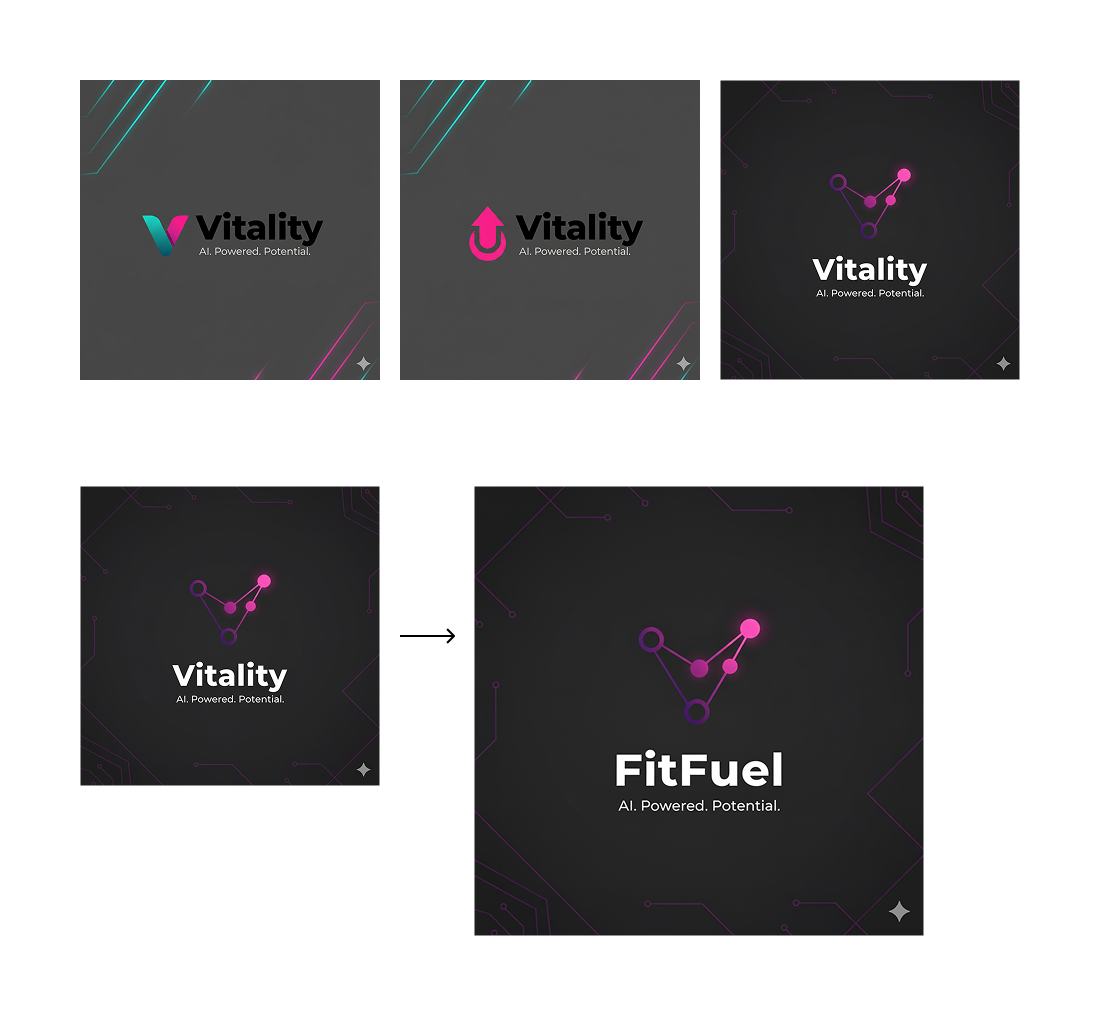
- Tool capability: Gemini was the only model (at the time) to display the accurate brand name, others mangled lettering.
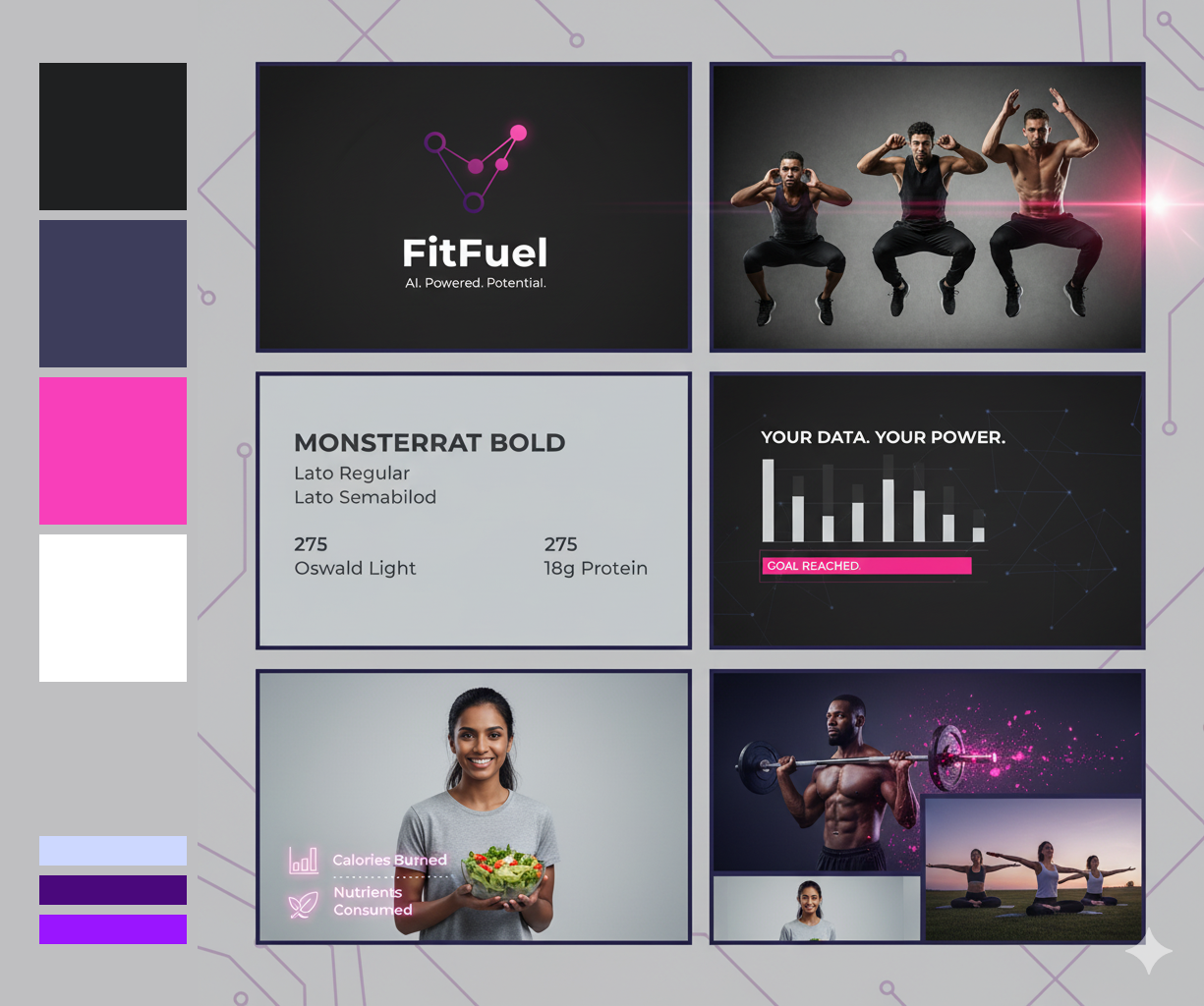
- Where human-in-the-loop was needed: When developing color palettes, needed to specify WCAG rules for contrast options.
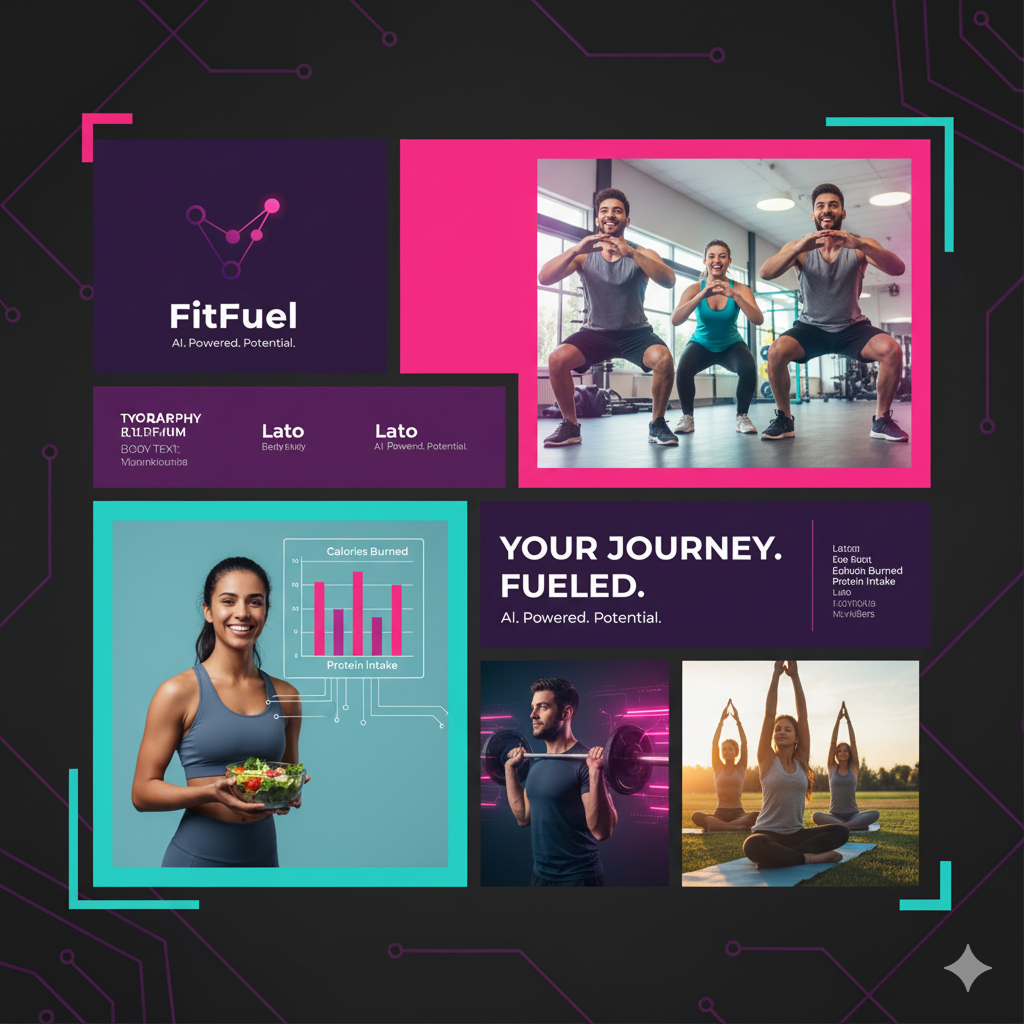
- Mood board was more relevant after designing the logo.

Initial persona development
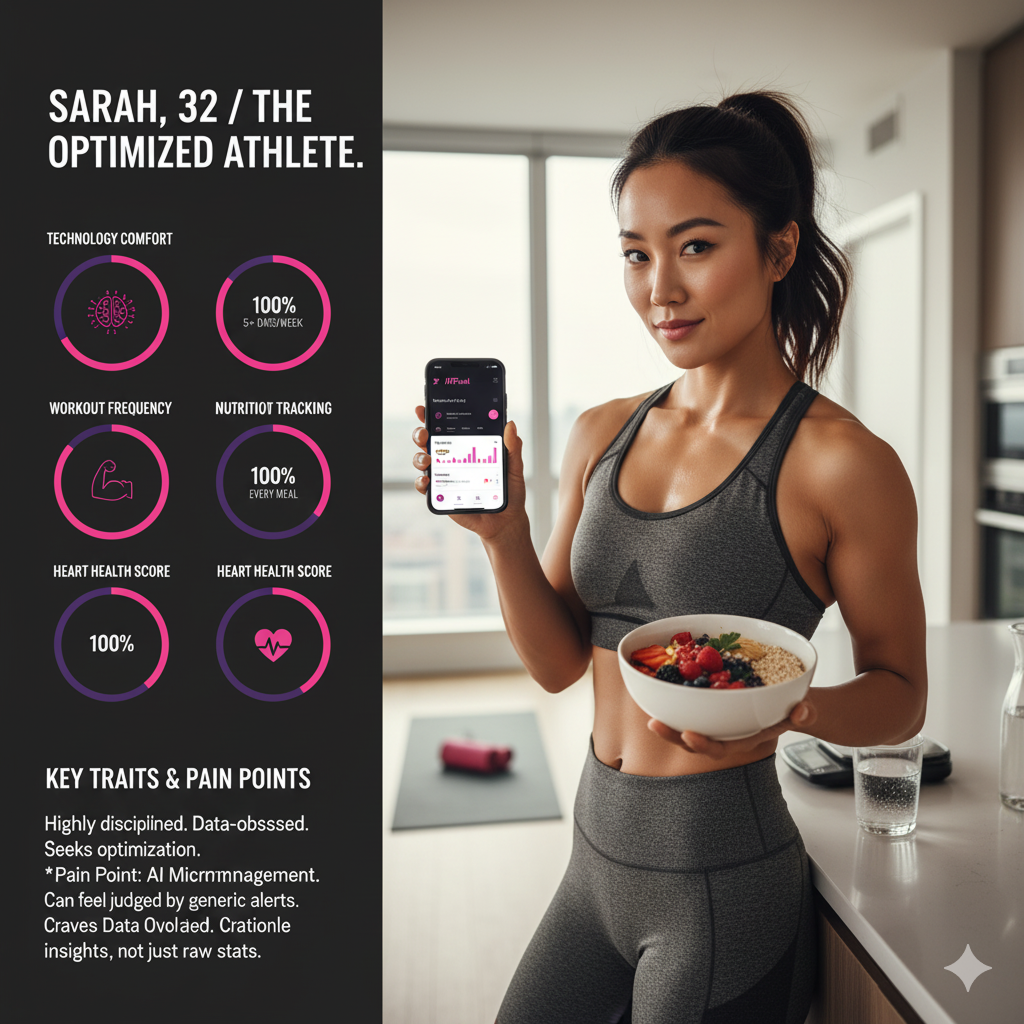
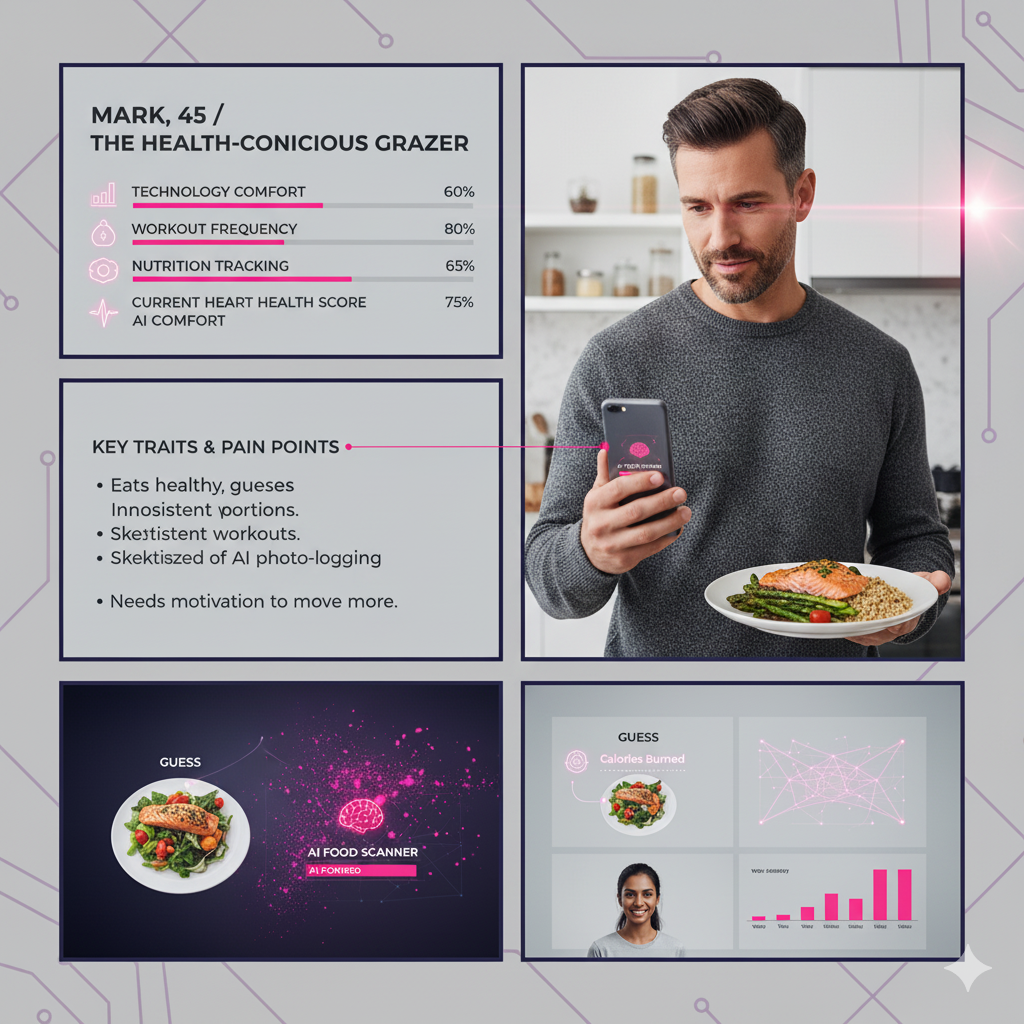
I asked AI to generate a user journey for onboarding and using a fitness app, outlining pain points at each step. I then used those pain points to guide personas.
- Models: Gemini and ChatGPT
My findings:
- Improved prompt engineering: Visual layout varied, needed to provide hierarchy direction, in addition to person types. Data visualization was great for inspiration, but inconsistent across each output.
- Tool capabilities: LLMs were clearly trained on younger demographics, lacking authentic population representation. Also, options didn’t provide a range of abilities.
- Where human-in-the-loop was needed: After conducting a bias and ethics audit, my written output was noticeably better, but coordinating images needed work.

Market research & data synthesis
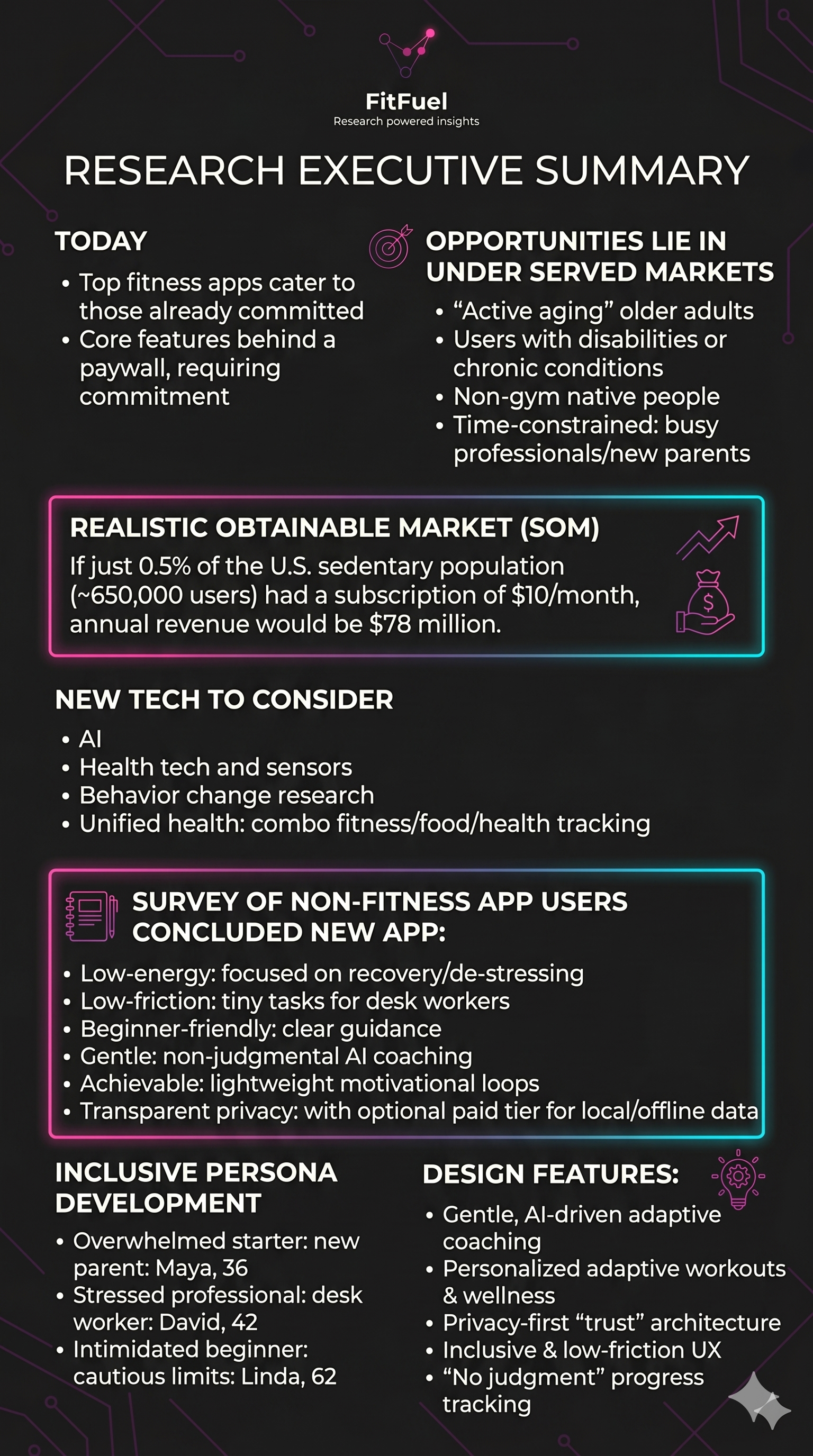
My next phase was conducting in-depth research, including market opportunities, new tech to consider, market size evaluation, survey creation, generating synthetic results, and full analysis, all done without talking to a single human.
- Models: Perplexity, Gemini/Deep research, ChatGPT
My findings:
- Improved prompt engineering: Competitive analysis was quick, and provided more detail than expected.
- Tool capability: Authentic white papers, with documented studies specific to fitness and even fitness app usage, were valuable from all models and helped with positioning. Generating a survey from the research, then fine-tuning to minimize bias, was surprisingly fast. I was skeptical of asking LLMs for synthetic survey results, but each model accurately followed the research, and responses aligned back to an identified, under-served user group.
- Where human-in-the-loop was needed: Market size numbers were validated, but associated metrics were made up. All the percentages had to be checked. Survey analysis was very finicky. Responses were not documented consistently, and the models weren't able to combine them until they were reverted back to the original format.
- The market with the most opportunity didn’t align at all with the initial branding.
Pivot: moving past the prompt
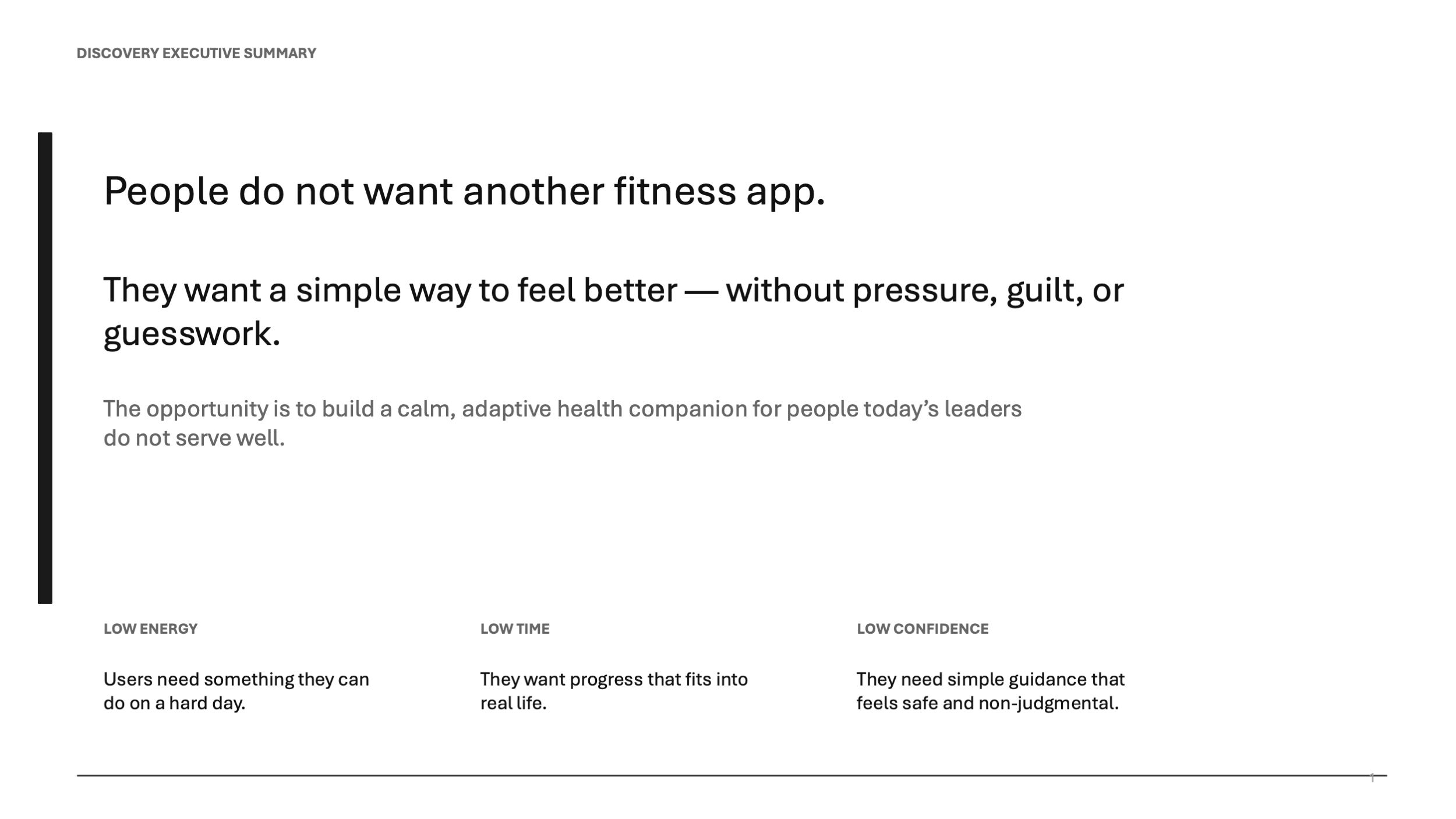
Research found a huge untapped market opportunity, but I wanted to know if it was worth pursuing. First, I did additional research specifically for people who had previously abandoned fitness apps. Once validated, I created a pitch deck to convince stakeholders that a pivot was the right move.
- Models: Perplexity, Gemini/Deep research, ChatGPT, Scholar.ai
My findings:
- Improved prompt engineering: Evolving from general to targeted white paper research was easy, and included identifying if it was internal or 3rd party funded.
- Tool capability: All the models were great at research synthesis, but ChatGPT was best for translating research into a strategic pitch deck. It also offered a simple, but relatively consistent, slide layout.
- Where human-in-the-loop was needed: Validating the right research fully before presenting findings.
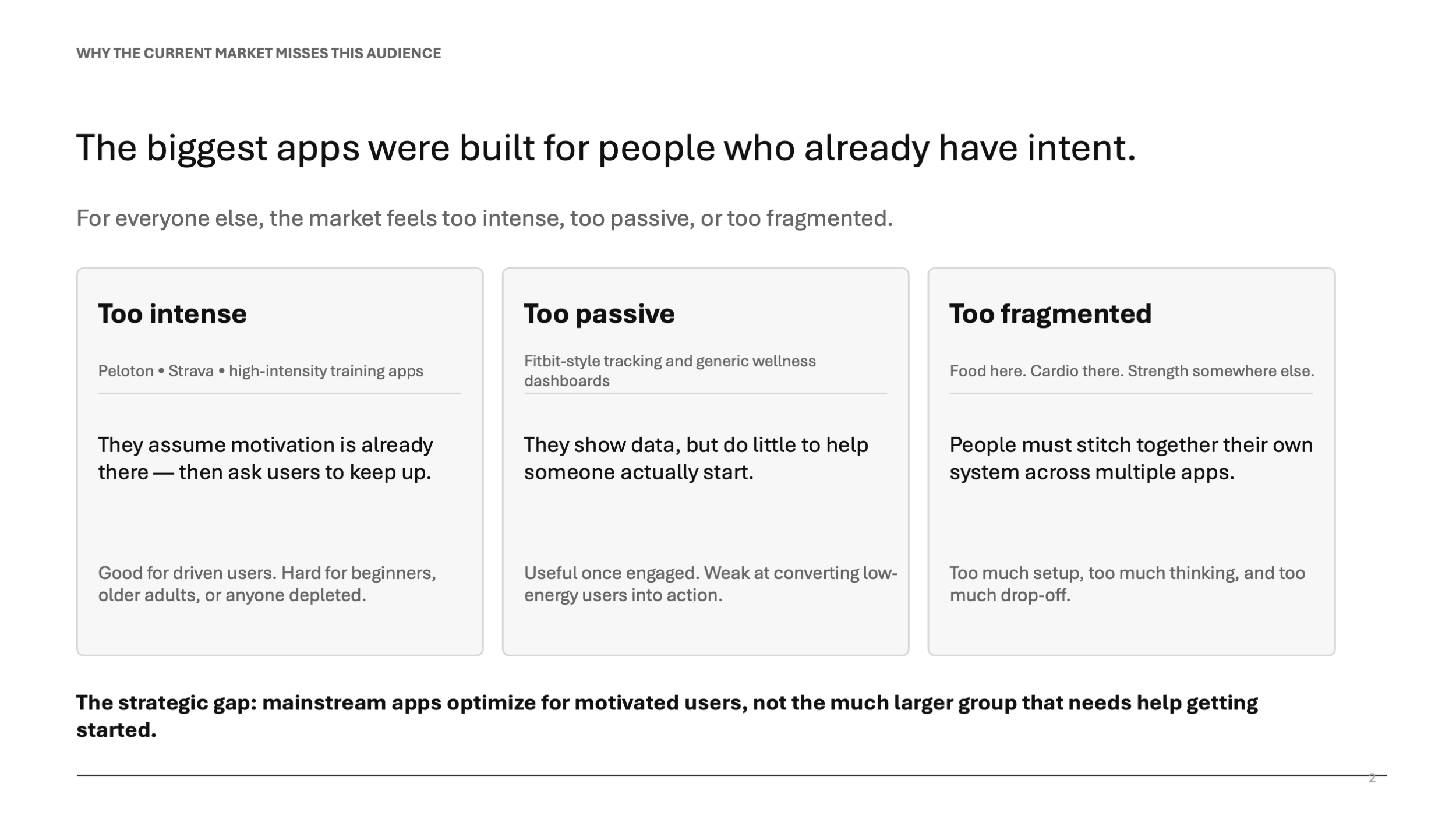
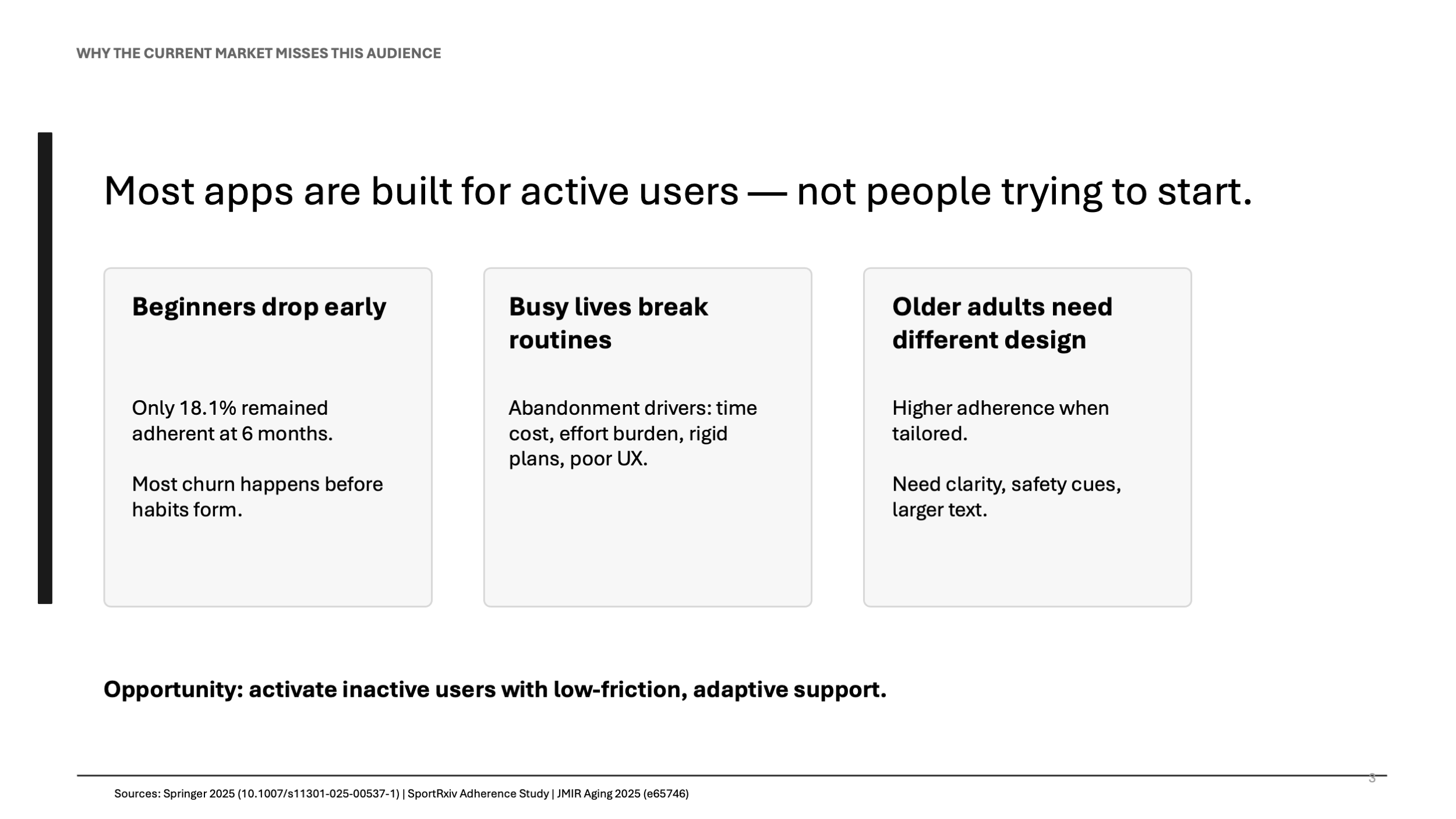
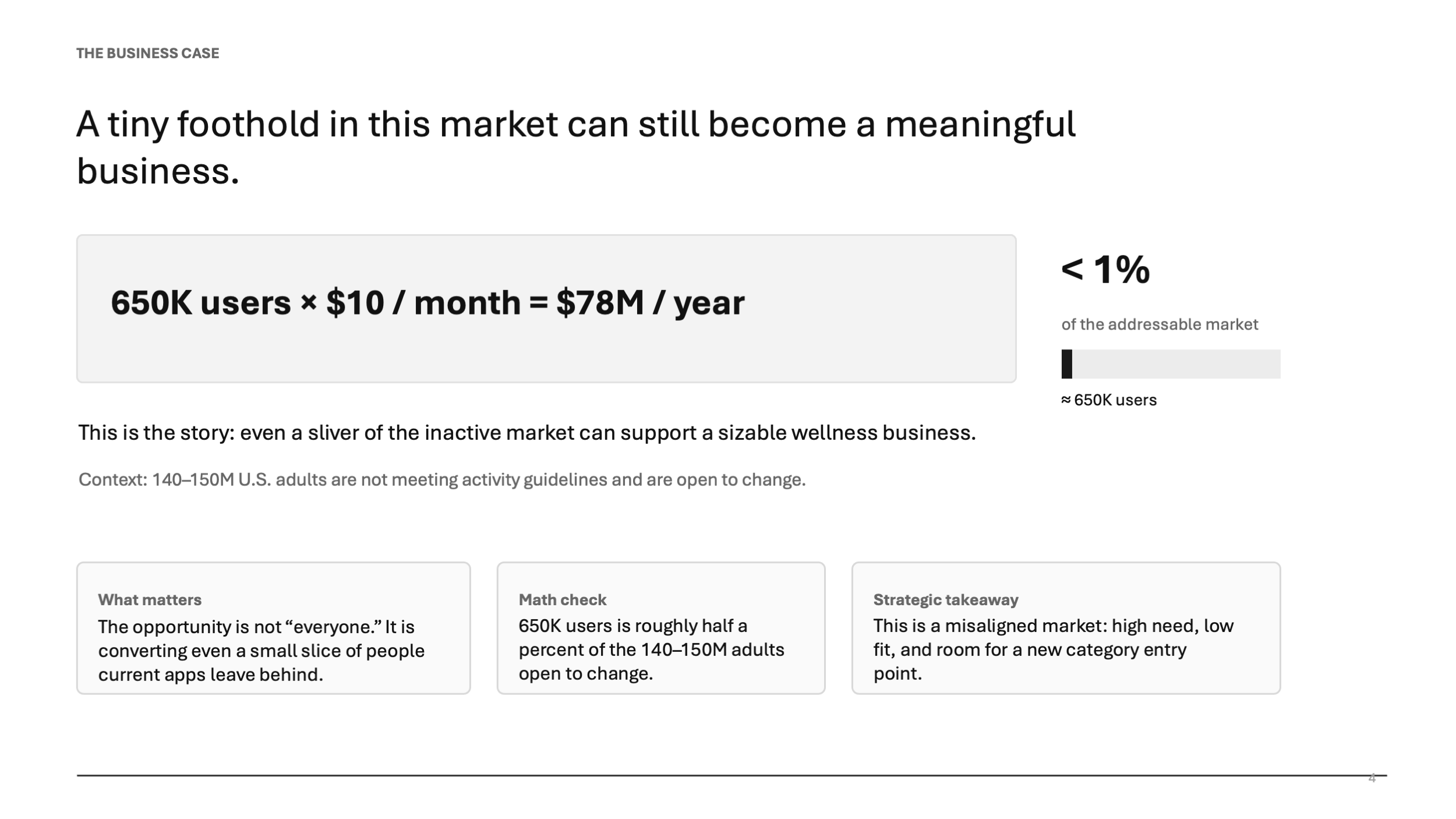
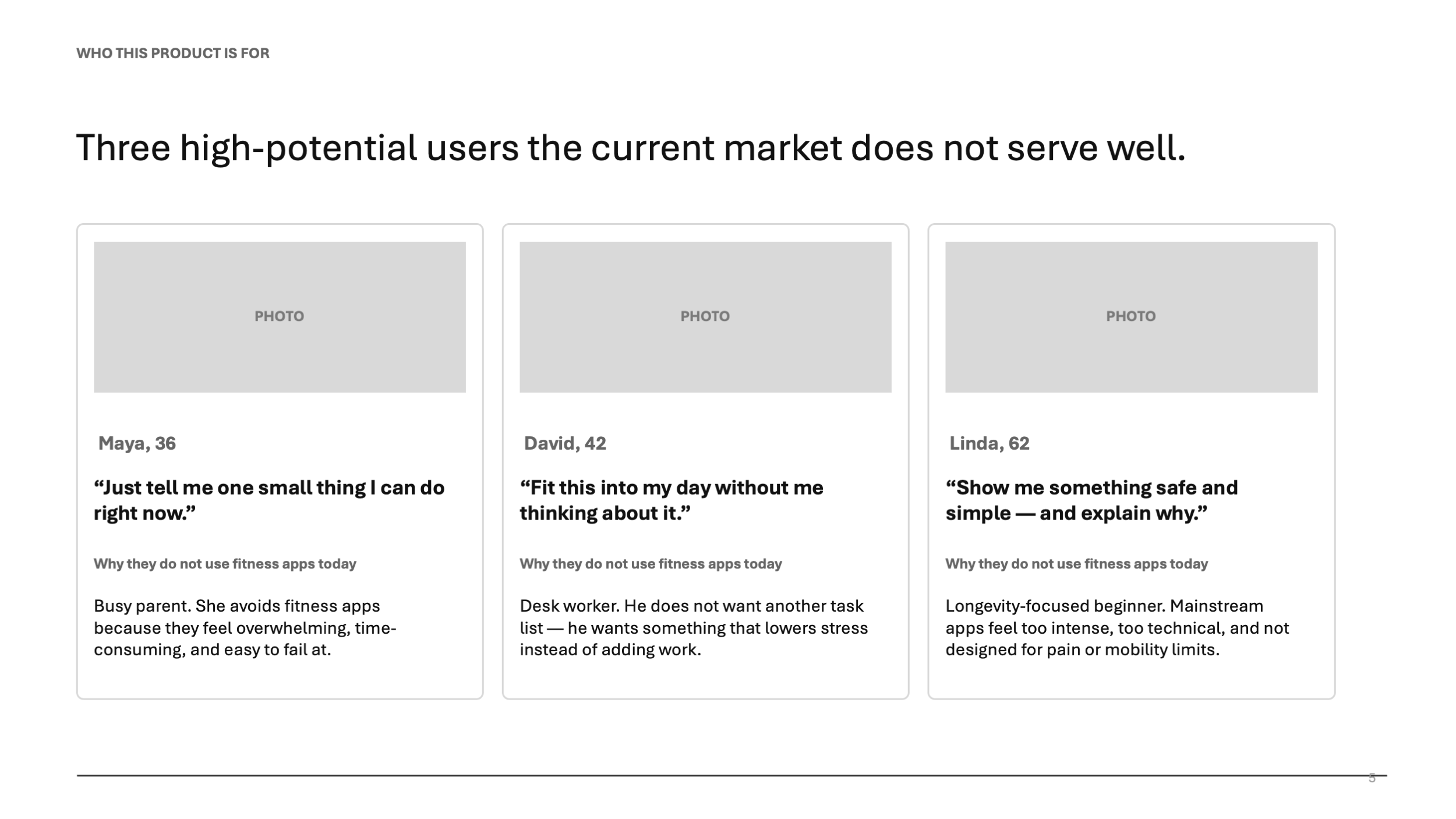
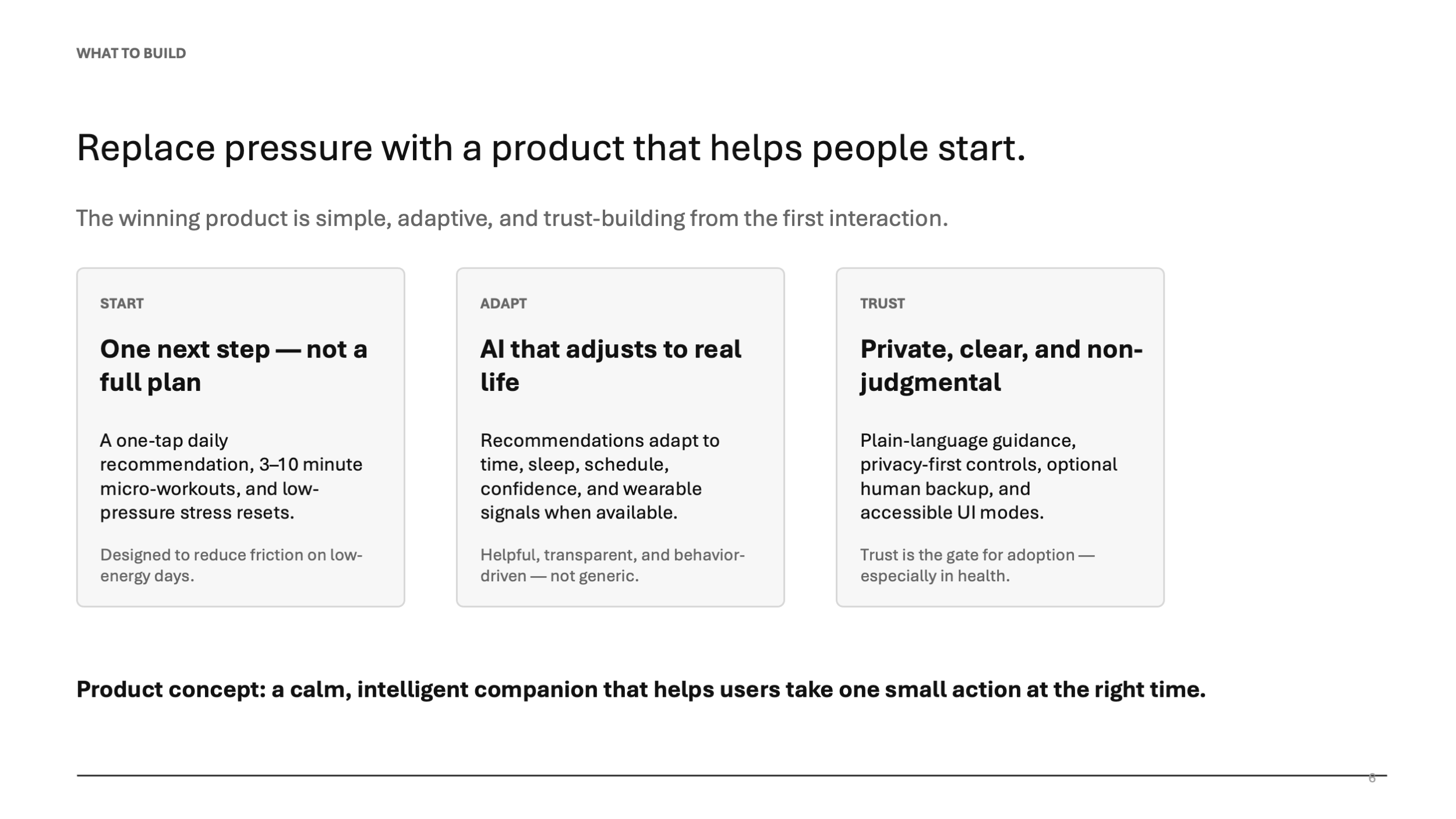
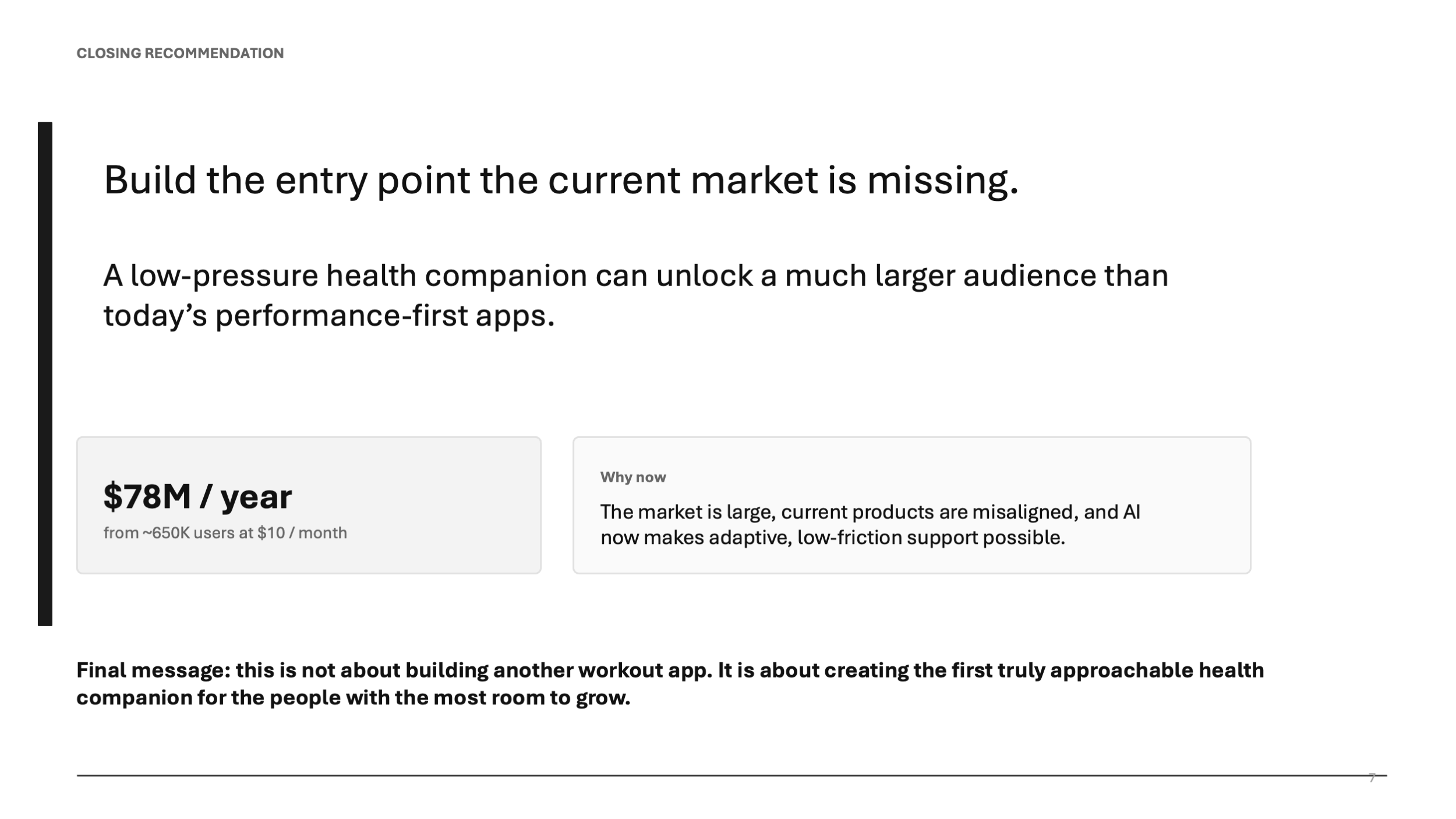
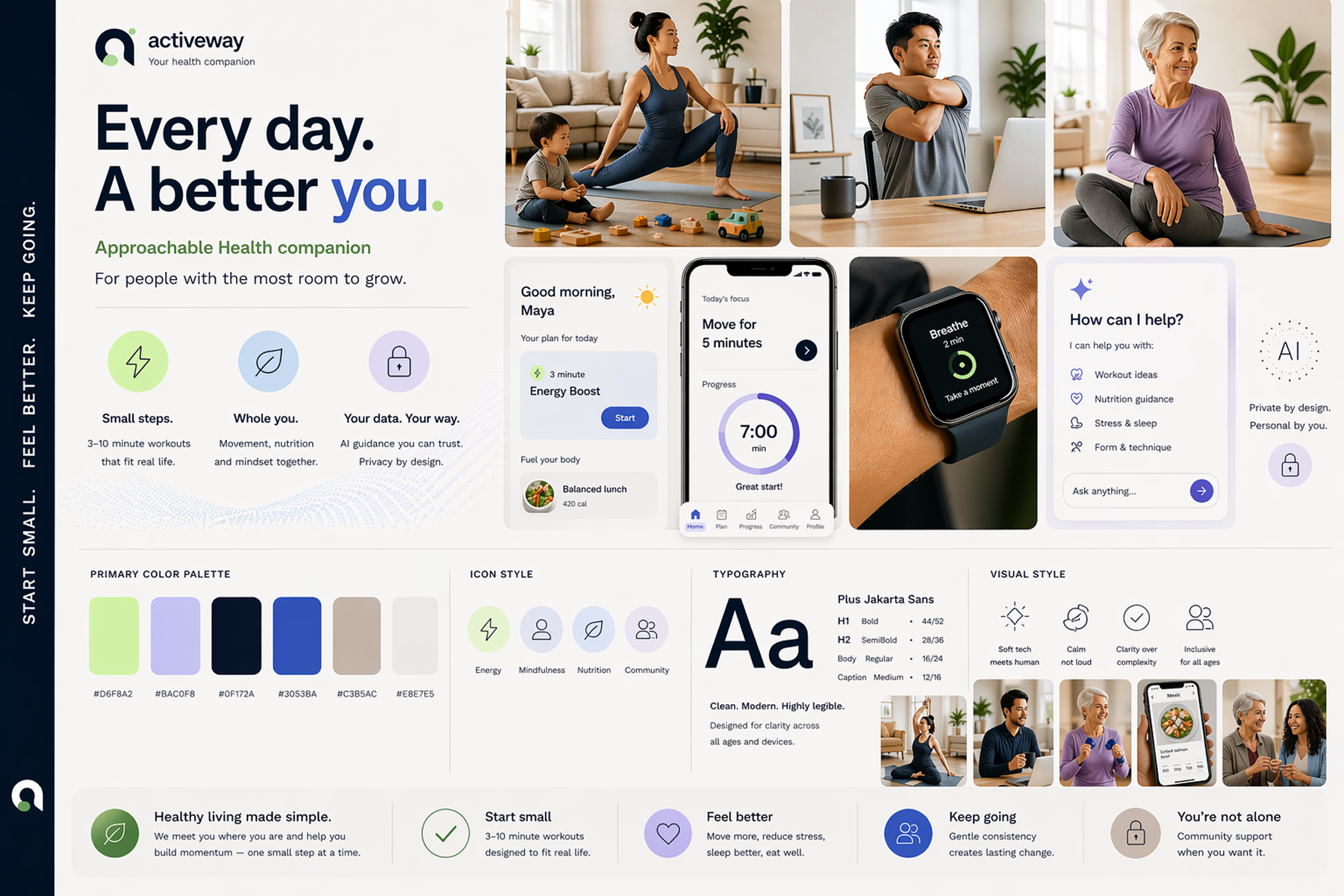
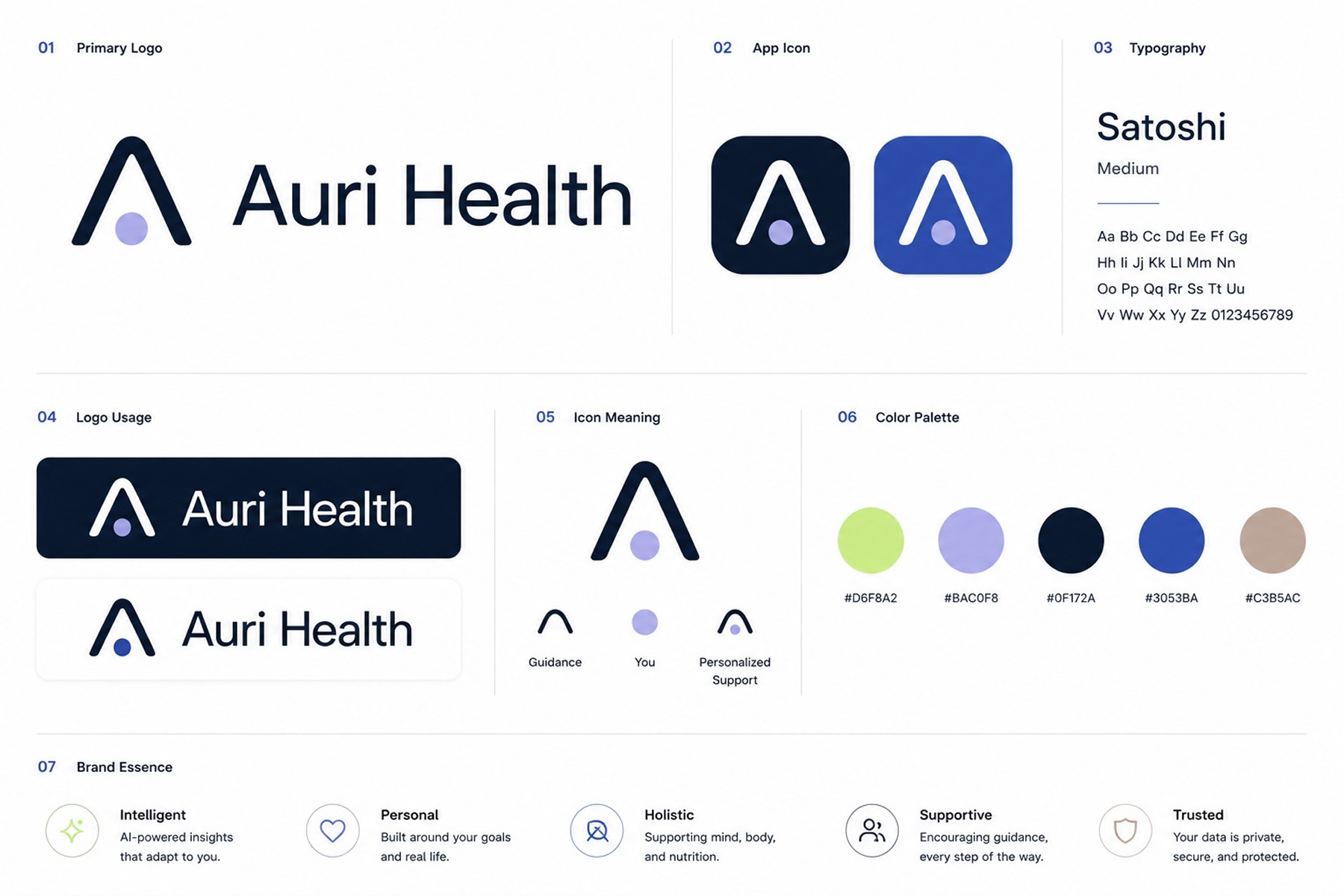
Based on the new direction, I revisited all the initial visual work including personas, brand name & logo, and new brand profile. The results overall had better direction, and a stronger message.
- Models: Perplexity, Gemini, ChatGPT
My findings:
- Improved prompt engineering: Revised personas were more in-depth after full discovery.
- Tool capability: Having market research and new personas available created a much stronger brand message.
- Where human-in-the-loop was needed: Color palettes were not as intuitive. I used Firefly to adjust initial options to feel like there was an AI element. The font selected is different from the one used for icons, which bugs me as a designer, but it’s fine for an initial concept.
- With one quick additional prompt, the model provided all missing elements for a full brand profile including brand messaging, secondary color palette, image & illustration direction, motion language, and an AI expression system.
As I moved through these early discovery phases, I quickly realized that mastering a specific prompt or isolated tool wasn't where the real value was. The true challenge was figuring out how to make these disconnected tools talk to each other within a cohesive design system. Moving forward, I’m shifting my focus from simply generating cool assets to analyzing how AI can fit into a repeatable, scalable workflow.
Coming up next
Right now, I’m moving out of the discovery phase and into active prototyping. The next update here will be a look into how I’m building AI functionality within interactive prototyping tools. I’m updating this page as I build. Come back soon to check out the prototype options!

Midjourney
Bioluminescent fabric

Midjourney
Bioluminescent couture
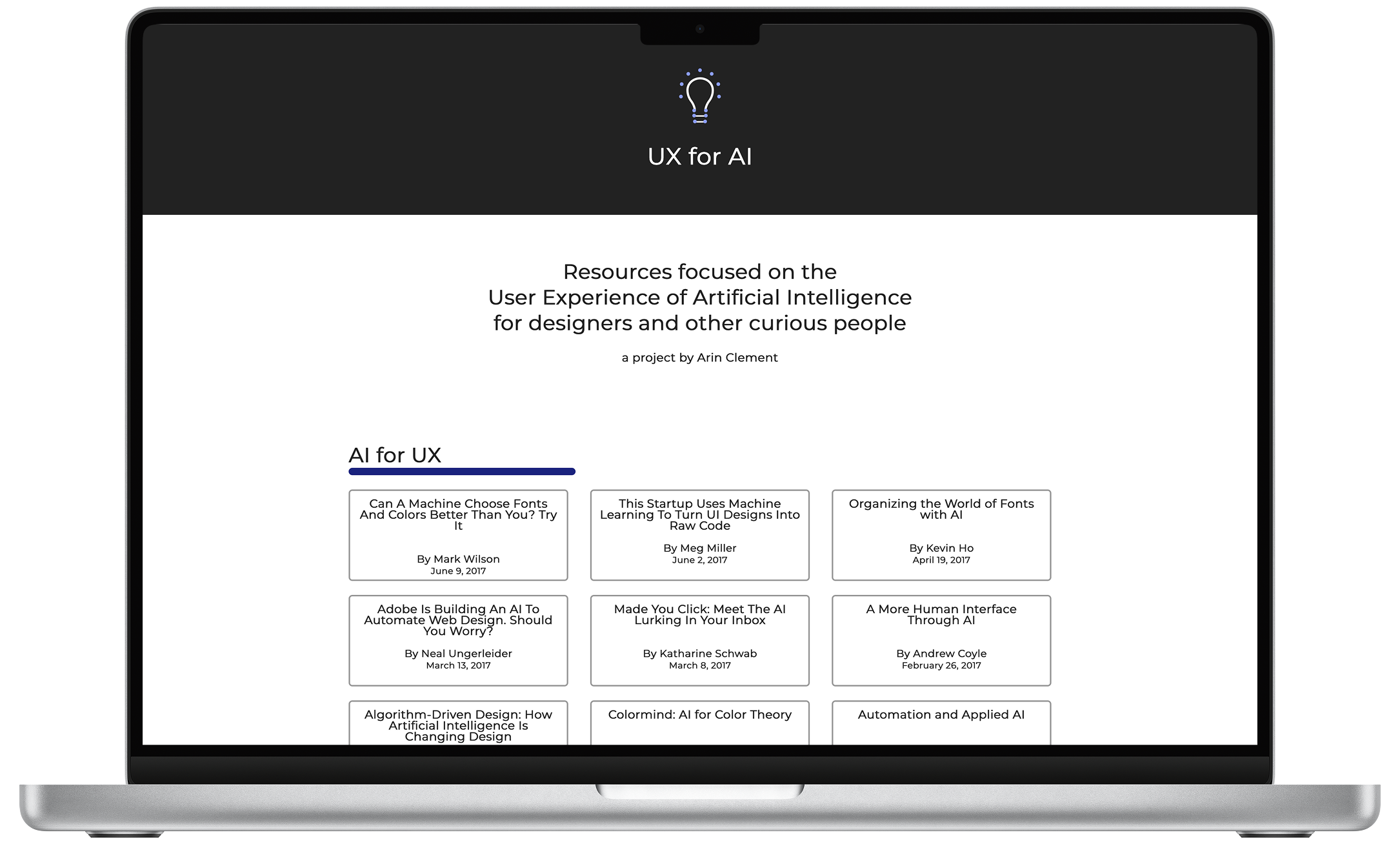
UX for AI
Now is the perfect time to re-invent this project, given the overwhelming information for new tools, upgrades, courses, and AI capabilities.